


National Geographic 1998 October
Publisher: National Geographic
Format: Paperback
ISBN: none
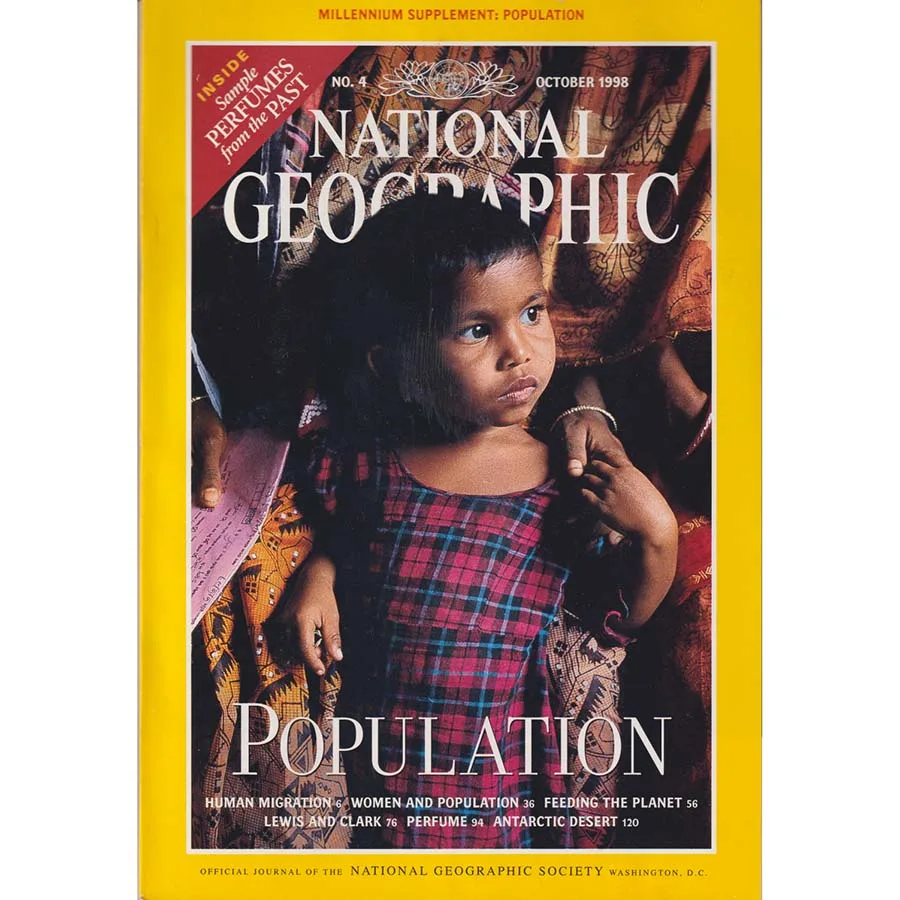
National Geographic, October 1998: the issue that politely taps you on the shoulder and says, “Hi. So… there are a lot of us now,” and then immediately produces charts, maps, and the sort of quietly terrifying big-picture thinking that makes you stare at your kettle like it’s part of a global supply chain (because it is).
The cover does that classic Nat Geo thing where it uses one still, human moment—small hands, a steady gaze, a whole world of context just outside the frame—and then slaps the word POPULATION across it in letters big enough to be seen from space. Not because it’s shouting. Because it’s trying, very hard, to be calm while doing mental arithmetic on the entire species.
This is a late-90s time capsule of optimism with a mild undertone of “we should probably get organised.” The decade of dial-up and pagers is peering over the edge of the millennium like: Right, everyone, quick headcount. Also… where are we all going to live, and who ate all the fish?
Inside you get a full buffet of “humanity, explained”:
-
Human Migration – the ancient, unstoppable habit of packing up and going “maybe over there?” but with modern borders, paperwork, and the emotional complexity of leaving home while your phone still has an aerial.
-
Women and Population – the bit the world always seems to rediscover every ten minutes: you can’t talk about population without talking about women’s lives, choices, health, and freedom. Nat Geo delivers the facts with that earnest editorial tone that smells faintly of libraries.
-
Feeding the Planet – the grand logistical magic trick of turning soil, sunlight, and sheer stubbornness into dinner for billions. Equal parts awe and “this system is held together by tractors and prayers.”
-
Lewis and Clark – because even when the theme is global demographics, Nat Geo cannot resist reminding you that exploration used to mean “walk west until the map stops being confident.”
-
Perfume – a glorious left-turn into the chemistry of seduction and commerce. Because after you’ve contemplated the future of civilisation, you deserve a palate cleanser involving flowers, aldehydes, and the human desire to smell expensive.
-
Antarctic Desert – the ultimate counterpoint: a place with almost no people, no smell, no noise, and absolutely no interest in your civilisation’s plans. Refreshing, in a bleak sort of way.
And then there’s the real star: the Millennium in Maps: Population pull-out poster. A magnificent sheet of paper whose entire purpose is to make you feel simultaneously informed and slightly responsible for everything. You’ll unfold it, nod thoughtfully, and then realise it’s too big to refold properly, which is honestly the perfect metaphor for the topic.
The irony here is delicious: this is National Geographic trying to map us—the one animal that refuses to stay put, keeps inventing new problems, and then makes glossy magazines about them. It’s the scientific equivalent of taking a family photo and discovering you’ve accidentally invited the whole street.
Condition: Good, meaning it’s ready for another round of existential geography. Expect minor age-related wear consistent with being handled by humans—the very phenomenon this issue is attempting to quantify.
Perfect for anyone who enjoys:
-
big, thoughtful themes with surprisingly sharp edges,
-
late-90s “millennium” energy (serious, shiny, slightly nervous),
-
and the unique pleasure of owning a magazine that can discuss global migration, food security, and perfume in one sitting—because of course it can.
Sold by Crappy Old Books, which feels right: this is the kind of issue you don’t just read, you consult, like a paper oracle from 1998 whispering, “You’re going to need more infrastructure.”
Keep browsing: See more National Geographic books Other books by National Geographic
